 Innovation and
 Lahore School Study on Export Stagnation Featured in The Express Tribune
The Lahore School of Economics’ latest research on Pakistan’s export performance has been featured in national media, highlighting critical insights from a comprehensive study covering product-level data from 2003 to 2024. The analysis reveals that despite repeated rounds of currency depreciation, Pakistan’s exports have remained largely stagnant in both dollar value and as a share of GDP. The study finds that exchange rate movements, once viewed as the primary policy tool to boost exports, no longer generate the desired impact across textiles, non-textile sectors, or services.
Instead, the report, as highlighted by The Express Tribune, emphasizes that innovation, diversification, and access to high-income markets play a far more decisive role in driving export growth. Export diversity and product complexity show strong and consistent positive effects on export performance, underscoring the need to expand Pakistan’s export basket beyond low-value commodities. The study also highlights sector-specific insights: lower corporate taxes support textile exports, while reduced import tariffs significantly benefit non-textile and ICT sectors, although such tariff reductions must be strategically targeted to avoid pressure on the balance of payments. Contrary to common perceptions, energy pricing appears to have only a weak relationship with export volumes, suggesting that factors other than gas and electricity tariffs are constraining competitiveness.
The report calls for a fundamental shift in Pakistan’s export strategy, moving away from short-term, price-based interventions toward long-term capability building. It stresses the importance of strengthening innovation, technological upgrading, and productivity growth through deeper linkages between industry, research institutions, and global markets. With Pakistan’s export basket still dominated by low-complexity goods, the study recommends transitioning into higher-value products such as technical textiles, electronics components, and knowledge-based services. The research concludes that sustainable export-led growth will depend on enhancing productive capabilities and accessing high-income markets, rather than relying on currency depreciation or incremental tariff adjustments.
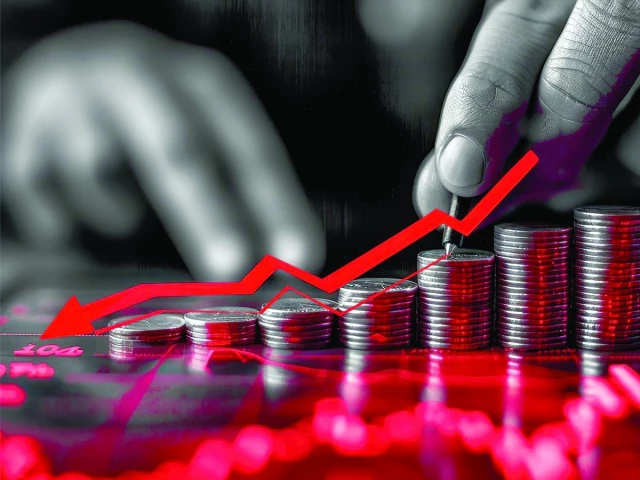
Exports stagnant despite rupee fall