
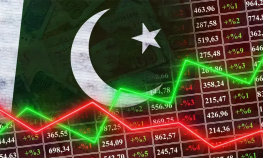
LSE Policy Uncertainty Index Drops in September 2026 amid Reserve Growth and Rate Stability

Pakistan’s economic, trade, and investment policy landscape saw a notable easing of uncertainty in September 2026, driven by rising foreign exchange reserves, stable interest rates, and successful quarterly tax collection, according to the latest study from the Lahore School of Economics.

Business Recorder Highlights LSE's ADE Conference on Stabilization and Social Toll

Pakistan’s repeated economic stabilization measures, spanning exchange-rate adjustments, privatization, and market liberalization, have fundamental structural impacts on the economy while escalating poverty levels, according to economic experts at the opening of the 8th International Conference on Applied Development Economics (ADE) in Lahore.

Business Recorder Highlights Lahore School's Strategic Economic Blueprint

Pakistan’s economic recovery is running into a wall of global energy pressures, according to the latest quarterly report from the Lahore School of Economics’ Modelling Lab. Grounded in research by economists Dr. Moazam Mahmood, Dr. Azam Amjad Chaudhry, and their team, the study reveals that GDP growth has slowed to 3.1% for fiscal year 2025-26.

Lahore School's Quarterly Report Featured in The Express Tribune

As reported by The Express Tribune, a new quarterly report by economists Dr. Moazam Mahmood and Dr. Azam Amjad Chaudhry of the Lahore School of Economics’ Modelling Lab issues grave warnings regarding Pakistan's economic outlook.

The Express Tribune Features LSE Study on How Pakistan's Own Policy Volatility Fractures Export Growth and Drags the Economy

A new study by Lahore School of Economics (LSE) researchers Azam Chaudhry and Gul Andaman, featured in The Express Tribune, reveals that Pakistan’s export struggles are driven by domestic policy instability rather than global trade conflicts.